
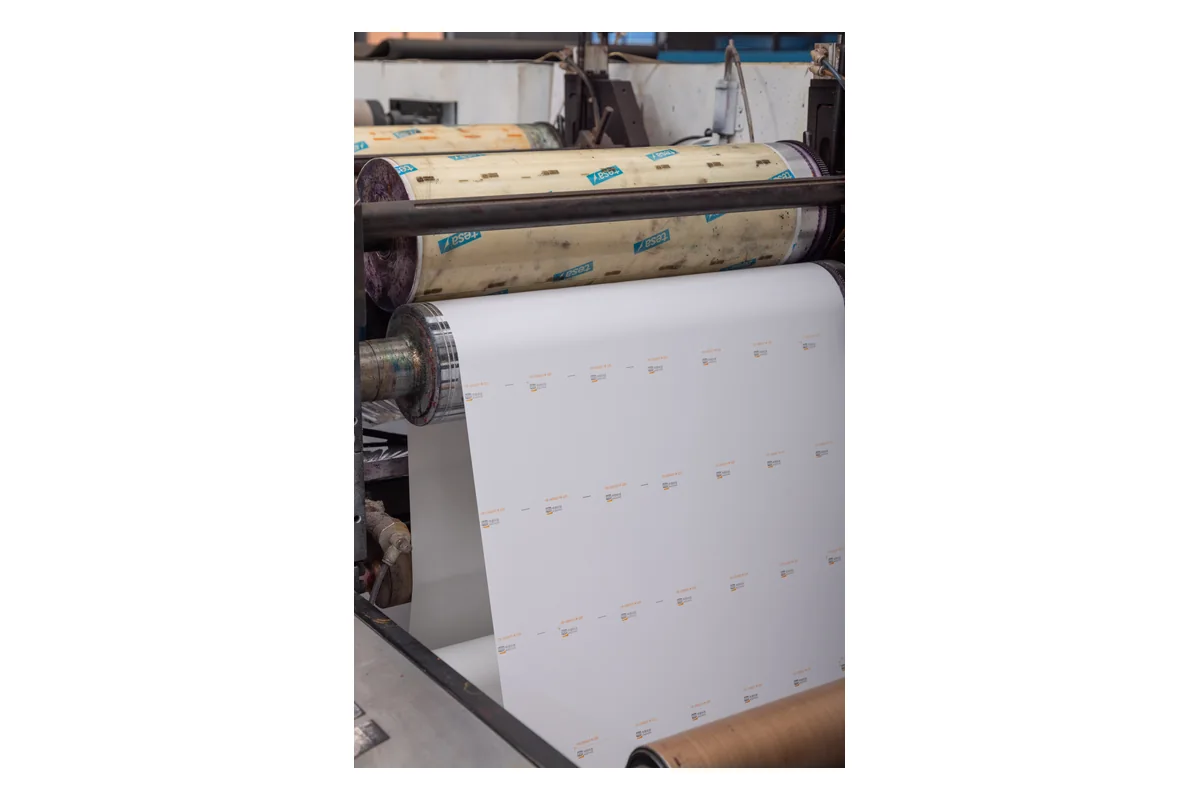
OEM Custom Label Process
OEM label process from specification, artwork, adhesive selection, die-cut, proofing, production, QC, and export packing.
Quick Answer
Buyers should specify measurable values before quotation: gsm or micron thickness, roll width, core diameter, coating or adhesive requirement, tolerance, MOQ, lead time, sample policy, and document list.
Specification Checklist
| MOQ | 500kg per thermal paper specification, 10,000 labels per SKU, or 1,000kg per film specification |
|---|---|
| Lead Time | 12-25 business days for standard programs |
| Sample Policy | 72-hour standard sample where material is available |
| Thermal Data | gsm, basis weight, caliper, thermal sensitivity, phenol-free, BPA-free, top-coat, slitting tolerance, core diameter, dynamic sensitivity (mJ/cm2) |
| Label Data | adhesive type, release liner, face stock, peel strength, flexo printing, digital printing compatible, die-cut, MOQ per SKU |
| Film Data | biaxially oriented, tensile strength, haze value, gloss level, heat seal temperature, oxygen transmission rate, moisture vapor transmission rate, corona treatment, micron thickness |
| Documents | ISO 9001:2015, ISO 14001:2015, FSC, REACH, RoHS, BPA-free, phenol-free, SGS reports |
| Export Packing | Roll wrap, carton, pallet, shipping marks, and container loading review |
Specification File
Keep the approved specification sheet with width, gsm or micron thickness, roll diameter, core inner diameter, coating side, adhesive type, release liner, corona treatment, and packing marks. This avoids rechecking the same values during repeat orders.
Machine Compatibility
Thermal paper must match printer head energy, label stock must match applicator speed and peel plate, and BOPP/PET film must match printing, lamination, slitting, and heat sealing equipment.
Testing Data
Thermal paper buyers should record dynamic sensitivity in mJ/cm2, basis weight, caliper, moisture content, and slitting tolerance. Label buyers should record peel strength, release value, face stock, adhesive type, and die-cut quality. Film buyers should record tensile strength, haze value, gloss level, OTR, MVTR, and corona treatment.
Order Planning
Confirm MOQ by specification, not by general product family. One order may include several compatible widths or SKUs, but coating chemistry, adhesive system, film grade, or die-cut size can change production setup.
Sample Approval
A sample should be tested on the buyer's actual printer, converting equipment, label applicator, packaging line, or lamination machine. Visual approval alone is not enough for repeat B2B supply.
Export Packing
Roll goods need core protection, moisture control, stretch film, pallet strength, label visibility, and container loading records. Carton quantities and pallet heights should match buyer warehouse handling.
Compliance Review
Document review should check certificate holder, report date, product scope, material name, test method, destination market, and whether the report applies to the exact order specification.
Repeat Supply
For repeat programs, keep retained samples, COA, roll labels, packing photos, and complaint records. This creates a controlled baseline for thermal paper, labels, BOPP film, and PET film programs.
Quote Comparison Checklist
Compare landed cost by specification, not only by product name. Roll width, gsm, core diameter, face stock, adhesive type, release liner, micron thickness, surface treatment, report scope, pallet design, and freight term can change the final price and supply risk.
FAQ
What specification should buyers confirm first?
Confirm material, width, gsm or micron thickness, core diameter, roll diameter, surface treatment, MOQ, lead time, sample policy, and certification documents.
What sample policy applies?
Standard samples can usually be prepared within 72 hours after specification confirmation when material is available. New coating, adhesive, or film trials need a longer test cycle.
Which documents are available?
ISO 9001:2015, ISO 14001:2015, FSC, REACH, RoHS, BPA-free, phenol-free, SGS reports, COA, and product specification sheets can be reviewed by order scope.
What technical data should be recorded?
Record gsm, basis weight, caliper, thermal sensitivity, adhesive type, release liner, peel strength, tensile strength, haze value, gloss level, OTR, MVTR, and corona treatment where relevant.
What lead time should buyers plan?
Standard programs usually take 12-25 business days, while new specifications requiring coating, adhesive, or film trials can take 25-30 business days.
Request samples or factory quotation
Use the sample and quote form to send product type, width, gsm or micron thickness, roll diameter, core diameter, coating or adhesive requirement, print method, quantity, destination country, and required documents.
Related Technical Pages and RFQ Support
Use these connected pages to compare materials, check application fit, and prepare a complete RFQ with material, size, thickness or gsm, quantity, packing method, and destination market.
- Logistics Labels
- Pressure Sensitive Labels
- Pressure Sensitive Adhesive
- Release Liner
- Logistics Shipping Solution
- Factory quality control
- Certifications and compliance documents
Request Sample RollGet MOQ & Lead Time
Sample and Quotation Request
Send your specification, quantity, destination, and required documents. The team will review MOQ, lead time, sample availability, and quotation details.