
Thermal Paper for Receipts, Labels, and Tickets: What B2B Buyers Need to Specify
Thermal paper for receipts, labels, and tickets depends on coating, image life, roll specs, and end use. A practical B2B buying guide from XIYONG.
Introduction
Thermal paper is the right choice when buyers need fast, ink-free printing for receipts, tickets, tags, or selected labeling applications, but the correct grade depends on printer type, storage conditions, and required image life. For procurement teams, the core specification is not just width and length; it is the combination of base paper, thermal coating, sensitivity, durability, and converting accuracy. XIYONG Packaging Co., Ltd. supplies thermal paper products for commercial packaging and printing use with a focus on practical order requirements.
Buyers usually compare thermal paper on four points: print darkness and speed, resistance to heat or friction, roll or sheet consistency, and total delivered cost. Those factors affect scan reliability, customer readability, machine uptime, and returns. A well-specified order reduces printer jams, premature fading, and waste during high-volume retail or logistics use.
What Is Thermal Paper?
Thermal paper is a specialty paper coated with heat-sensitive chemicals that form an image when passed under a thermal printhead, eliminating the need for ink or ribbon in direct thermal printing systems.
In commercial use, thermal paper is commonly converted into POS rolls, ATM rolls, kiosk rolls, ticket stock, and some direct thermal label formats. Performance varies by coating system, basis weight, smoothness, top coating, and environmental exposure. For buyers, that means the same product name can cover very different real-world durability levels.
Key Specifications for Thermal Paper
When sourcing thermal paper, buyers should confirm both paper performance and conversion details before requesting price. The most common commercial specifications include:
- Base paper and basis weight: common grades often range around 48 gsm to 80 gsm depending on receipts, tickets, or tags, with caliper affecting roll length, stiffness, and printer compatibility.
- Thermal coating structure: standard thermal layer for general receipts, or added top coat for improved resistance to moisture, oil, plasticizer contact, scratching, and handling wear.
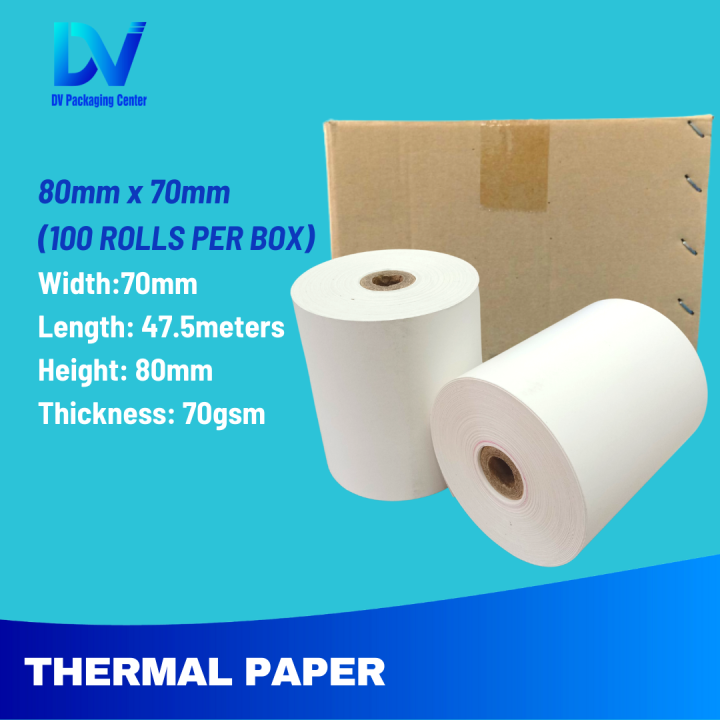
- Roll or sheet dimensions: width, outer diameter, core size, winding direction, splice limits, and roll count per carton must match the installed printer fleet.
- Image performance requirements: sensitivity, print darkness, barcode readability, and expected image life in storage or distribution conditions should be agreed before production.
Applications
Thermal paper remains widely used where print speed, simple printer mechanics, and low consumable complexity matter more than long archival life. Retail receipts, queue tickets, parking tickets, courier records, and kiosk output are typical examples. In these uses, clean conversion and stable print response are more commercially important than premium graphics.
Some buyers also source thermal paper for direct thermal labels used in logistics, food service, and short-cycle inventory tracking. The tradeoff is straightforward: direct thermal systems remove ribbon cost and simplify operations, but the printed image is generally more vulnerable to heat, abrasion, and long storage than thermal transfer alternatives.
- POS and retail receipt rolls for supermarkets, convenience stores, pharmacies, and hospitality counters.
- Ticketing and queuing media for parking systems, cinemas, transport counters, kiosks, and self-service machines.
- Direct thermal label stock or converted formats for logistics, warehouse identification, and short-term shipping use.
Buying Considerations
The main buying decision is fitness for use, not simply the lowest roll price. A low-cost thermal paper grade can become expensive if it causes light print, scanner failures, blackening in warm transport, or customer complaints about fading receipts. Buyers should define the actual exposure conditions: warehouse heat, shelf time, handling frequency, oil contact, or outdoor transfer periods.
Commercially, printer compatibility and conversion tolerances matter as much as paper chemistry. Roll diameter that is too large, cores that are inconsistent, or poor winding tension can interrupt checkout lanes and service counters. XIYONG Packaging Co., Ltd. works with buyers to align product format and material selection with the intended machine setup and use case.
- Confirm end-use life: short-term receipt use needs a different grade than ticketing or label applications exposed to friction, humidity, or longer storage.
- Check environmental constraints: direct thermal images can darken or fade when exposed to heat, sunlight, PVC contact, oils, or rough handling.
- Align converting details with equipment: width tolerance, core size, winding, roll count, packaging method, and carton labeling affect receiving and daily operations.
Why XIYONG
XIYONG Packaging Co., Ltd. serves B2B buyers across labels, flexible packaging films, pouches, paper packaging, and related converted packaging materials. For thermal paper programs, that broader packaging background is useful because many procurement teams buy across multiple print and pack formats and need a supplier that understands practical production specifications.
The value XIYONG brings is specification-driven supply rather than one-size-fits-all selling. Buyers can discuss application, format, and handling requirements first, then match thermal paper construction and conversion details to the job. That approach is especially important for export purchasing, where replacement cost, lead time, and freight efficiency all matter.
- B2B-focused support around format, dimensions, packaging configuration, and order practicality.
- Product coverage across packaging categories, helping buyers coordinate thermal paper with labels, pouches, films, or paper packaging needs.
- A specification-first approach that helps reduce mismatch between paper grade, printer setup, and actual commercial use.
Conclusion
For most buyers, successful thermal paper sourcing comes down to specifying the use environment, printer format, and required image performance before comparing quotes. XIYONG Packaging Co., Ltd. supports thermal paper procurement with a practical, conversion-aware approach that helps purchasing teams order the right grade for receipts, tickets, and direct thermal applications.
Related Product Pages
If you are planning a live packaging project, these product pages can help you compare structures, materials, and application fit more quickly.
Topic Cluster Links
Related Industries
Related FAQ
Related Downloads
Related Guides
Related Comparisons
Related News
Related Case Study
Technical Evidence
CTA
FAQ
What is the difference between thermal paper and normal paper?
Thermal paper has a heat-sensitive coating that creates an image under a thermal printhead, while normal paper does not. For buyers, the practical result is faster, ink-free printing for receipts or tickets, but also greater sensitivity to heat, abrasion, and some storage conditions than standard paper.
How do I choose the right thermal paper for my printers?
Start with your printer model and roll specification, then match the paper grade to the real use environment. Buyers should confirm width, roll diameter, core size, winding direction, basis weight, coating type, and whether the printed image must resist friction, humidity, oils, or extended storage.
Is thermal paper suitable for long-term labels or archival records?
Usually no, standard thermal paper is better for short- to medium-term use than archival applications. If the print must last longer or face heat and handling, buyers should evaluate top-coated thermal grades or compare direct thermal with thermal transfer solutions before placing volume orders.
Next sourcing steps
Use the article as a specification checklist, then send product use, size, thickness or gsm, quantity, destination country and required documents for review.