
PET Film for Packaging: Specifications, Applications, and Buying Considerations
PET Film supports durable labels, flexible packaging, and paper-packaging components where clarity, dimensional stability, barrier performance, and print quality matter.
Introduction
PET Film is a practical choice when a packaging structure needs dimensional stability, tensile strength, print performance, or resistance to handling. XIYONG Packaging Co., Ltd. supplies PET Film for packaging applications including labels, flexible packaging films, pouches, and related converted structures, with the final specification determined by the product, printing method, lamination design, and filling conditions.
The right grade depends on whether the film will be printed, laminated, metallized, coated, die-cut, or used as a standalone web. Buyers should confirm thickness, width, roll format, surface treatment, appearance, barrier expectations, and downstream converting requirements before placing a production order.
What Is PET Film?
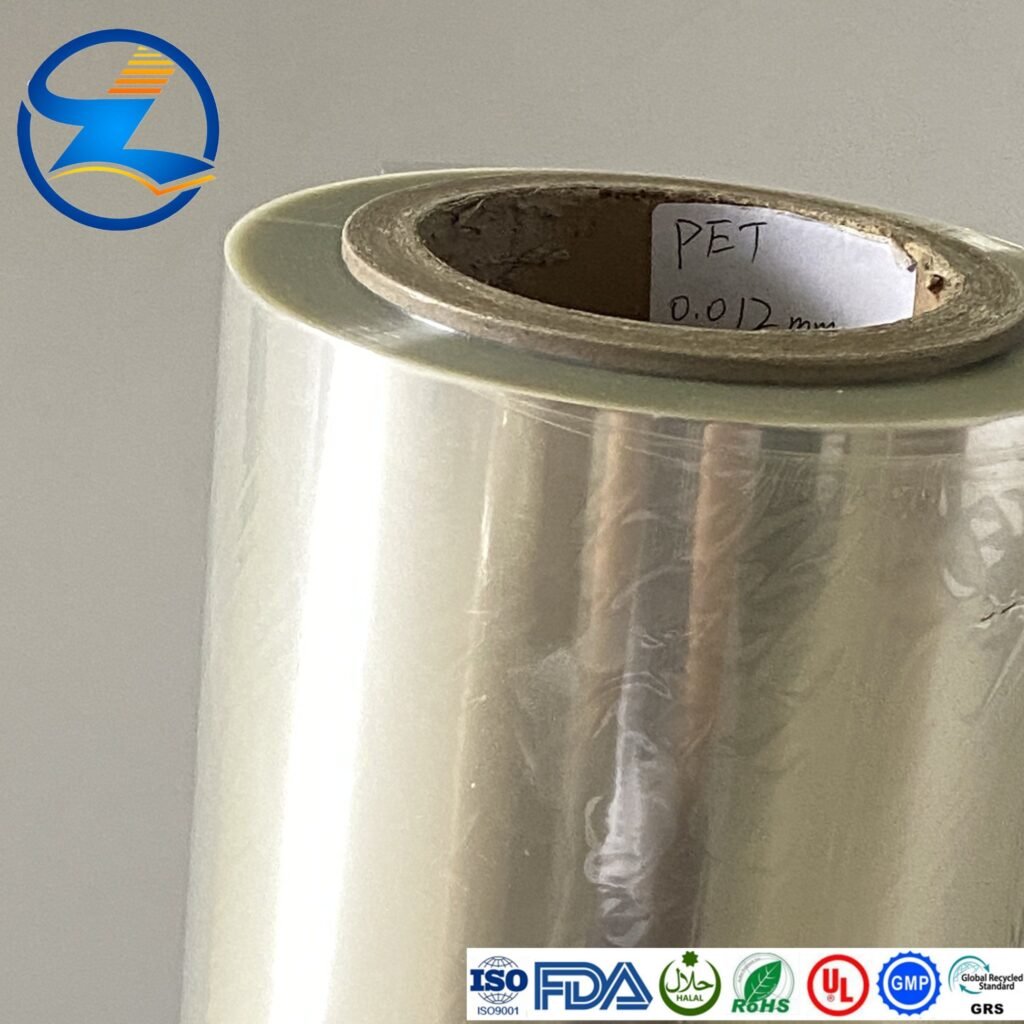
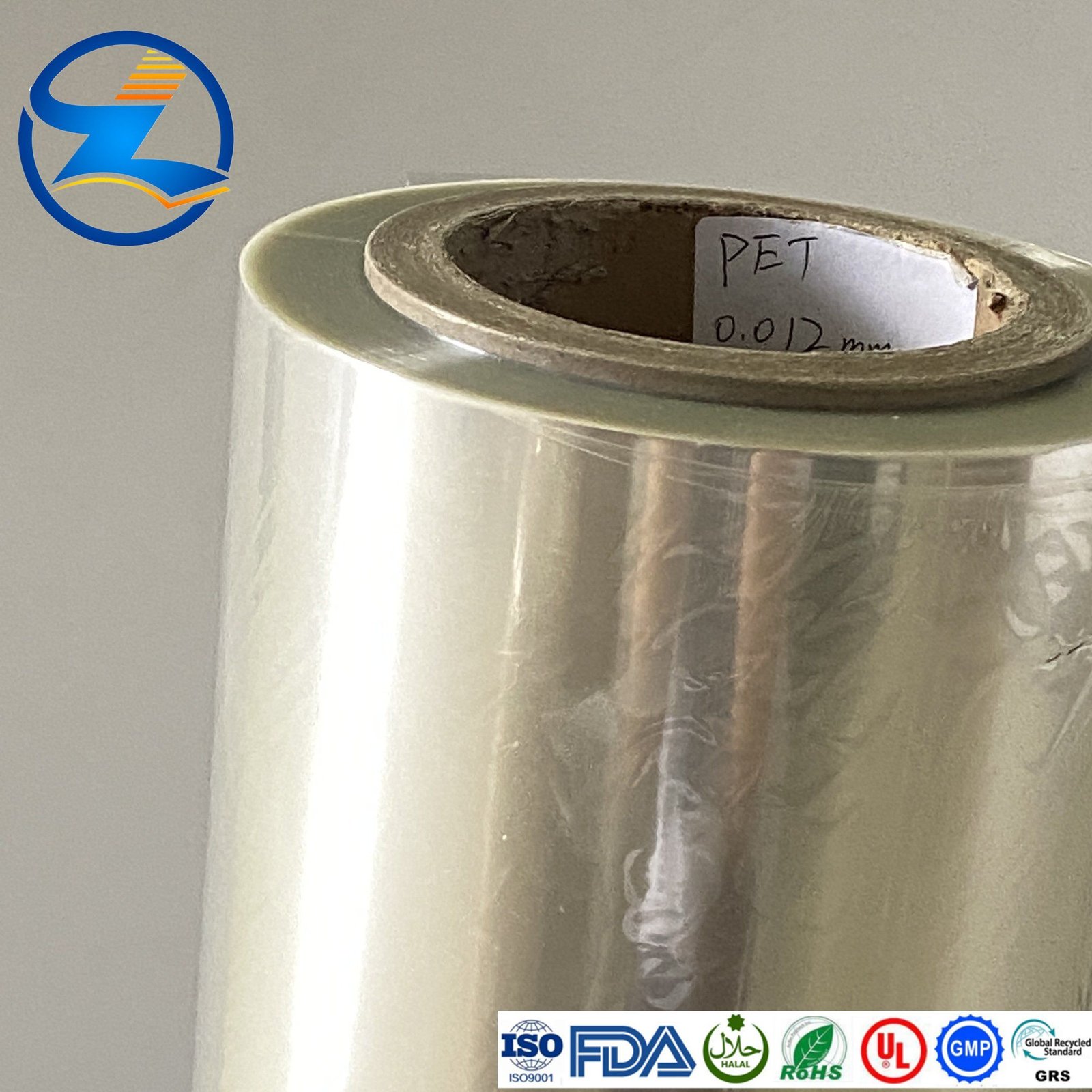
PET Film is a thin polyester substrate made from polyethylene terephthalate and commonly used in packaging as a printable, dimensionally stable, and mechanically durable web. It may be clear, white, coated, or metallized, and is often laminated with other films or sealant layers.
In packaging, PET Film is usually used as an outer web or structural layer rather than the primary heat-sealing layer. Its performance comes from a balance of stiffness, clarity or opacity, tensile strength, temperature resistance, and compatibility with printing, coating, lamination, and slitting operations.
Key Specifications for PET Film
PET Film specifications should be matched to the complete packaging structure rather than selected in isolation. The following factors normally affect material performance, converting efficiency, cost, and order acceptance.
- Material: polyethylene terephthalate, commonly supplied as biaxially oriented PET or BOPET for packaging structures.
- Thickness: selected according to stiffness, puncture resistance, print handling, lamination design, and finished-pack requirements; buyers should request the available thickness range for the intended application.
- Surface and appearance: clear, white, coated, or metallized options may be considered depending on visibility, branding, opacity, and barrier objectives.
- Processing compatibility: confirm corona or other surface treatment, ink and adhesive compatibility, roll width, winding direction, core size, splice policy, and tolerance requirements before production.
Applications
PET Film is widely used in flexible packaging laminates where the outer web must support high-quality graphics and withstand transport and handling. It can be combined with materials such as polyethylene, cast polypropylene, aluminum foil, or barrier-coated films, depending on sealability, barrier, and product-protection requirements.
The material is also relevant to label production and selected paper-packaging components. Its dimensional stability can help during printing, coating, laminating, and die-cutting, but the correct surface treatment and adhesive system must be confirmed with the converter.
- Flexible packaging and laminated pouches for dry goods, snacks, household products, and other packaged products.
- Printed label facestocks and decorative packaging elements where clarity, stiffness, or dimensional stability is required.
- Metallized or coated packaging structures where visual impact or improved light and gas barrier is part of the design.
- Paper-packaging and composite structures that require a polyester film layer for protection, print support, or functional performance.
Buying Considerations
Start with the finished-pack requirement, not only the film name. A pouch for a dry product, a label for a curved container, and a high-barrier laminate can all use PET Film but require different thicknesses, treatments, adhesives, and sealing structures.
Ask for technical documentation and production samples before approving a bulk order. Important checks include web appearance, thickness consistency, roll quality, print adhesion, lamination bond, coefficient of friction where relevant, and performance on the buyer's actual converting equipment.
- Define the end use, product contact conditions, filling temperature, storage environment, and expected shelf-life requirements.
- Confirm whether the film will be printed, laminated, coated, metallized, or die-cut, and identify the required surface treatment for each process.
- Align order details such as width, length, roll diameter, core specification, packing method, minimum order quantity, lead time, and shipping terms.
- Evaluate tradeoffs between clarity, opacity, stiffness, barrier performance, sealability, material usage, and total converted-pack cost.
Why XIYONG
XIYONG Packaging Co., Ltd. serves B2B packaging buyers across labels, flexible packaging films, pouches, and paper packaging. That category coverage helps buyers discuss PET Film as part of a complete packaging structure instead of treating it as an isolated raw-material purchase.
A commercially useful PET Film quotation should connect the requested material to its conversion route and finished application. XIYONG can work from the buyer's required use, dimensions, structure, appearance, and order conditions so the specification is evaluated in a practical packaging context.
- Product discussions can be aligned with labels, flexible packaging, pouches, and paper-packaging requirements.
- Material selection can be reviewed around the buyer's printing, lamination, coating, slitting, or die-cutting process.
- Commercial details such as roll configuration, dimensions, packaging, lead time, and shipping requirements can be addressed during quotation.
Conclusion
PET Film remains a dependable packaging substrate when buyers need a combination of dimensional stability, strength, appearance, and print performance. The best specification depends on the complete structure, converting process, and product-protection target. XIYONG Packaging Co., Ltd. provides a practical starting point for buyers sourcing PET Film for labels, flexible packaging films, pouches, and paper-packaging applications.
Related Product Pages
If you are planning a live packaging project, these product pages can help you compare structures, materials, and application fit more quickly.
Topic Cluster Links
Related Industries
Related FAQ
Related Downloads
Related Guides
Related Comparisons
Related News
Related Case Study
Technical Evidence
CTA
FAQ
What is PET Film used for in packaging?
PET Film is used for flexible packaging laminates, labels, coated or metallized structures, and selected paper-packaging components. It provides stiffness, dimensional stability, strength, and a suitable surface for printing or lamination. It is commonly combined with sealant or barrier layers because standard PET Film is not normally the primary heat-sealing layer.
How should buyers specify PET Film?
Buyers should specify the end use, thickness, width, roll format, appearance, surface treatment, and intended converting process. The quotation should also identify printing, coating, lamination, metallizing, or die-cutting requirements. Product conditions, filling temperature, storage environment, and required barrier performance may affect the final structure.
Can PET Film be used in pouches and flexible packaging?
Yes, PET Film is commonly used as an outer or structural layer in flexible packaging and pouch laminates. It supports graphics, stiffness, and handling durability, while another layer generally provides heat sealing. The correct combination depends on the product, barrier target, pouch format, filling process, and sealing conditions.
Next sourcing steps
Use the article as a specification checklist, then send product use, size, thickness or gsm, quantity, destination country and required documents for review.